
A Long Way Down –
The Air Britain British Classics Fly – In.
As featured in the September Issue of the International Auster Club Magazine
Copyright IAC 2011

When the invite came to attend the Air Britain ‘British Classics’ Fly – In at North Weald, an event to celebrate 65 years of the Auster and Chipmunk, as well as 50 years of the Beagle Terrier and Rollinson Condor, I immediately booked our syndicated Auster for the weekend. I wasn’t entirely sure where North Weald was, at the time, apart from being vaguely aware that it was ‘down south’ somewhere. To be honest, I really didn’t think the trip would be possible in any case; our Auster had had on-going battery charging problems and it was very doubtful that the weather would co-operate for such a long trip over such a short space of time. Still, we live in hope.
Our Auster, G-AIJT, is a modified J4 based at a farm strip twenty miles or so north of Aberdeen (yes, there is a ‘north’ of Aberdeen) and we fly about up there mostly blissfully unaware of the active community of other Auster owners and pilots that proliferate south of the border. The Fly-In, then, was a great opportunity to ‘make contact’ and take our venerable old nag on a decent trip. A decent trip it turned out to be, too; one involving a shade over 1000 nm and over 12 hours flying for the round trip! Nice. JT was actually built in 1946, so this really was her birthday in a way and I felt that there was no better way to celebrate her long years of flight than by taking her on a trip like this.
I had a spare seat and put the invite out on the group e-mail; within minutes, Iain Davidson replied that he would take it. Iain and I joined the syndicate in 2010 and despite both of us sharing some misgivings about the machine in the beginning (something to do with the dreadful take-off and climb performance, the inadequate brakes, the bad ground handling manners, poor visibility and lack of flaps, all topped off nicely by almost continuous carbon monoxide poisoning) neither of us have looked back since. I don’t know what it is about the Auster, any Auster, but their character and that ‘old nag’ dependability slowly draw you in and we have both found ourselves hopelessly in love with them.
‘JT’ is not exactly what you would call a ‘Concours’ machine and is well used, rather than much loved, with a bruised and battered exterior and an over-worked Continental 0-200 dragging her weary frame in and out of the rough bit of mushy turf that constitutes the strip where we are based. We joked about entering the Concours d’ Elegance competition, just for a laugh and imagined what kind of reception JT would receive amongst a no doubt, immaculate collection of lovingly restored ‘proper’ Austers. The reception we did receive, from all at Weald, was, in actuality, amazing. We couldn’t believe how welcome we were made to feel and far from dragging down the side, as we had imagined, our odd little Auster became something of an attraction, which was all a bit of a shock, to us.
With Iain doing night shifts at the Coastguard station in the week leading up to the event, I planned a route that would be both easy to navigate and that would take in some great scenery, with ample opportunity to have a ‘play’ and take in the sights. I needed to plan the trip around JT’s fuel usage, obviously, but also wanted to utilise the impressive endurance she has with the additional belly tank, so that we could get down there in the minimum time (bum stamina also being a major factor).
The route had us coming out of the strip with a light fuel load as the grass was long and it had been raining heavily for much of the week. First stop would be Dundee, a relatively short hour’s hop, to tank up as it had a nice, long runway and a climb out over the Estuary (two up, two tanks full of fuel and some camping gear doesn’t give much of a margin in JT, which is like a fat old seagull at the best of times). From there it would be a coastal route southward; out over the Firth of Forth past Edinburgh and down past the Holy Isle and Bamburgh Castle, Newcastle, Sunderland and Durham Tees, Whitby, Scarborough and finally Flamborough Head, before cutting in-land paralleling the Humber for the second stop at Sandtoft, just outside Sheffield. For the final leg, we would route back to the coast at Skegness and cross The Wash into East Anglia, skirting all the busy stuff in a clockwise fashion until we reached Ipswich, before routing in via Colchester and the VRP at Chelmsford into North Weald, after 501 nm and probably over six hours flying for the day.
We were both due back to work on the Monday after the Fly-In and in the week leading up to our planned departure on the Friday, we watched the weather forecast nervously and then, with disbelief. Good weather, as many readers will know, is not something Scotland is particularly well known for; to have a forecast giving sunshine and light winds for the whole weekend, not only in Scotland, but up and down the whole country, was freaking us out a little; we even had a forecast tailwind for the route down! Sure enough, as the weekend approached and the forecast held steady, we were running out of excuses not to go.
Finally, on Friday morning, Iain swung by my house at 06:15 and we headed for the strip. It was a beautiful, cool morning, with a little cloud lingering but the day had that ‘fresh’, nice day smell about it and the forecast and TAFs were all rock solid for the flight down, though there were some showers forecast near Newcastle for mid-day. This was it; we were really going!
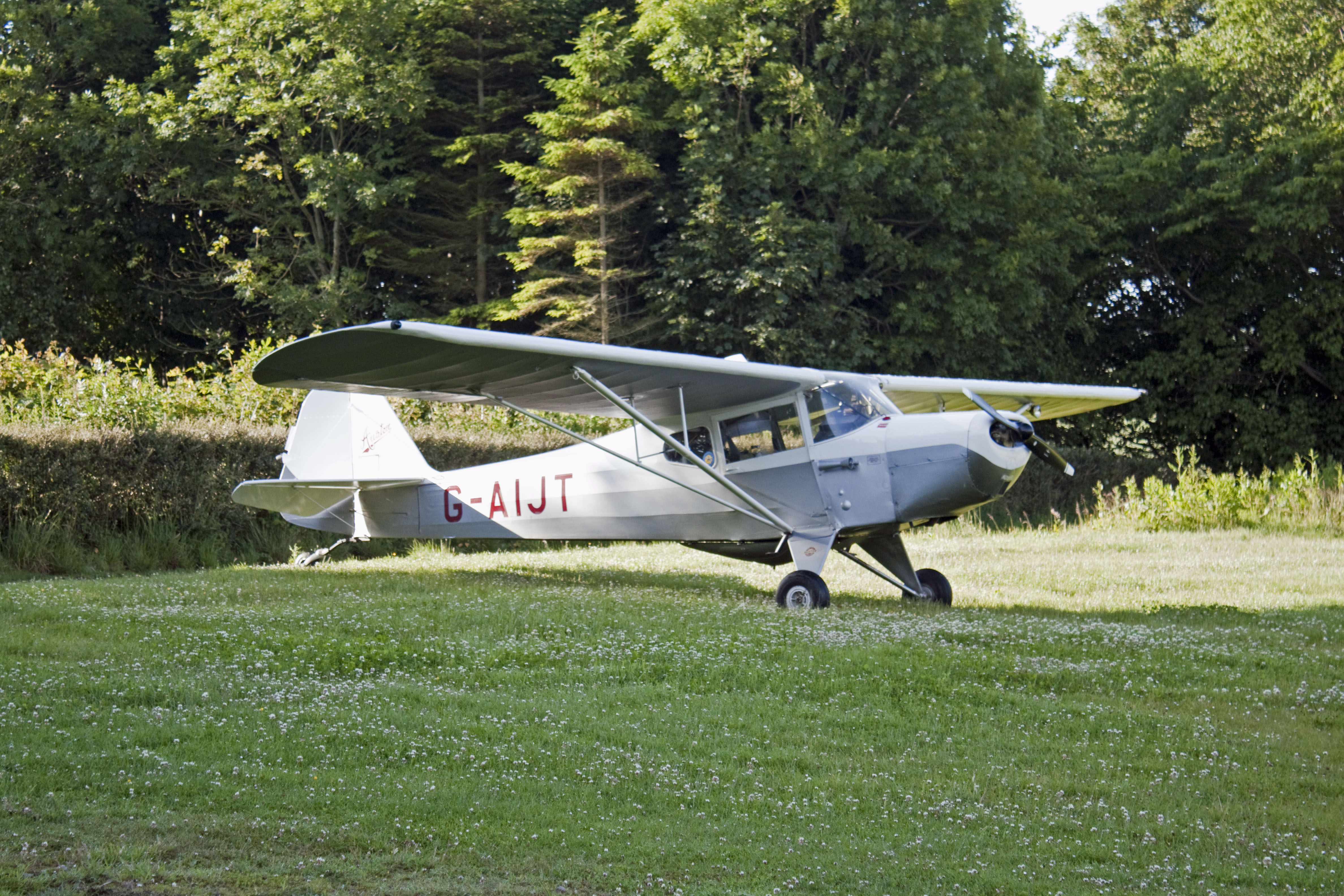
Iain’s Dad had come out to see us off and after loading the gear, walking the strip to assess the relative state of mushiness and pre-flighting the Auster, we pointed JT’s nose up the westerly run, opened the throttle, and waited. Eventually, we did begin to see the first flicker of airspeed and I plucked her off at 40 mph, stuffing the nose back down to try to hit that magic 60 to climb away before we ran out of space. She behaved herself and we were comfortably climbing away into the cool morning air. I asked Iain if we should nip back and give his Dad a wave before we headed for Dundee and his smile gave me the answer. We wheeled around and buzzed the strip, giving Iain’s Dad a good wing waggle as we chugged past at a staggering 90 mph and then climbed up and headed for the coast.
The flight down to Dundee was a good start, with lovely, smooth, morning air and bright sunshine. We flew southward past the harbour at Aberdeen and on to Stonehaven where we circled the imposing 13th Century ruins of Dunnottar castle, used in location for the 1991 Mel Gibson film, Macbeth. We took some pictures and then continued on toward Montrose. At that time in the morning, the long, sandy expanse of the beach at Montrose was empty and we dropped down low for the wonderful sense of freedom that zooming along a beach un-encumbered brings, before climbing back up and routing in to Dundee. We were already on a high, by this time and now had only five and a half hours to go!


The next leg was the longest of the day at 233 nm and would take close to three hours with an 80 knot groundspeed. I was to fly this second leg, also, before handing over to Iain for the final leg into Weald.
We were on the ground for over an hour after fruitlessly trying to locate breakfast, but were off again by 09:45. JT performed well on the tarmac for the take-off roll, but didn’t seem to want to climb much at all once we were airborne. I think we saw between fifty and one hundred feet per minute until we were at about 700 ft and into freer air, by which time we were at the head of the Estuary and at our first turning point at Newburgh, being overtaken by two Cherokees that were advised by Dundee tower that the aeroplane ahead was ‘an Auster’ and ‘slower than everyone else’! We finally clawed our way up to a workable 1500 ft and could settle into the cruise, routing around the RAF base at Leuchars to the coast.
The second leg of the trip was easily the most enjoyable; settling down to enjoy the sights as they wound their way slowly past the window and counting off the landmarks and towns. Edinburgh Approach looked after us across the Firth of Forth and then we checked in with Scottish Information, remaining with them for much of the way down, past St. Abbs Head and the Holy Isle.
The Holy Isle, or Lindesfarne, to give its proper name, is a small island off the Northumberland coast and the site of an ancient Monastery that was founded by St. Aiden of Iona in 635 AD. It lies at the end of mile upon mile of uninterrupted sandy beach jutting out into the North Sea and once again, we dropped down low and flew along its entire length, swinging by the old Monastery and basking in the freedom of flight with the windows open and the sea air filling the cockpit, which made a nice change from the usual Avgas and exhaust fumes.
What a day it was and what a feeling – flying as we wished to fly from one end of the country to the other, for an event that marked 65 years of the very aeroplane that we had grown so fond of and that was now taking us across the wonderfully varied landscapes of the British coastline. With the sea, the sand and the surf rolling by beneath the Auster’s wings, we grinned inanely at each other, as the realisation that we were finally doing the flight that we had so looked forward to and which we had not really expected to go ahead, sank in.
The next stage saw us routing down past the Newcastle and Durham Tees zones, just offshore, until we reached Whitby and the vertiginous limestone and shale cliffs of Robin Hood’s Bay, formed 170 million years ago and the remnants of an ancient sea. From there we routed to Flamborough Head, seeing a pair of RAF Tornados zipping down to low level in front of us, before we turned inland for Sandtoft at the narrow point of the Humber, with the impressive Humber Bridge visible in the distance.
By this time the feeling in our legs was beginning to disappear and I was getting cramp in my neck. The final run in to Sandtoft seemed to take an age, as we bumped along in the now very thermic air of mid-day, with the persistent smell of Avgas fumes and exhaust beginning to make us feel a little ill.
Finally, the runways at Sandtoft appeared and we set up for a down-wind join for runway 05 and landed in a light –cross wind. We parked up next to a tidy looking Bull-Dog and when the engine finally shuddered to a stop, we realised how tired we were, clambering out of the Auster like a pair of wobbly monkeys.
We arranged fuel and topped up the main tank and then went to the office to pay. The landing fee included a coffee and cake, which was a nice touch and then we tucked into a big plate of Scampi and chips each, feeling pretty pleased with ourselves for the good time we’d made so far. We’d left the strip in Aberdeenshire at 07:20 and touched down in Sandtoft, 306 nm and two legs later, at 12:30. We were sure to reach our goal by early evening now and it was a good feeling.

Iain took the left hand seat for the final leg down to North Weald and we were airborne at 14:30. The flight was a tiring one after the distance we’d already flown and with the heat of the day now throwing up some nice thermals; the air was bumpy, requiring constant corrections on the controls.
We calculated that we had 1:15 left in the Aux tank and planned to switch to this once in the cruise and run it dry before using the main tank for the rest of the way to North Weald; the total flight time expected to be in the region of 2:45 for the remaining 195 nm.
Once airborne, we skirted south, around Humberside Airport and then routed for Skegness and The Wash, half an hour in to running the engine on the Aux tank. Just as we were approaching Skegness and I was gazing out the window at the view, the engine suddenly began to splutter and cough. I turned sharply to look at Iain, who was looking back at me with the same expression; eyes wide open, eyebrows somewhere near the top of his head and mouth open. Iain’s hand darted like a shot into the bowels of the cockpit and switched the fuel selector valve over to the main tank, pulled the carb’ heat to hot and put the mixture to full rich, somehow all at the same time. The engine growled back into life and we burst out laughing in relief, the giggles lasting all the way across The Wash, whose sandbars now took on a new and special interest. We later figured out why the tank had run dry 45 minutes before we had expected it to and have revised out timings for future use!

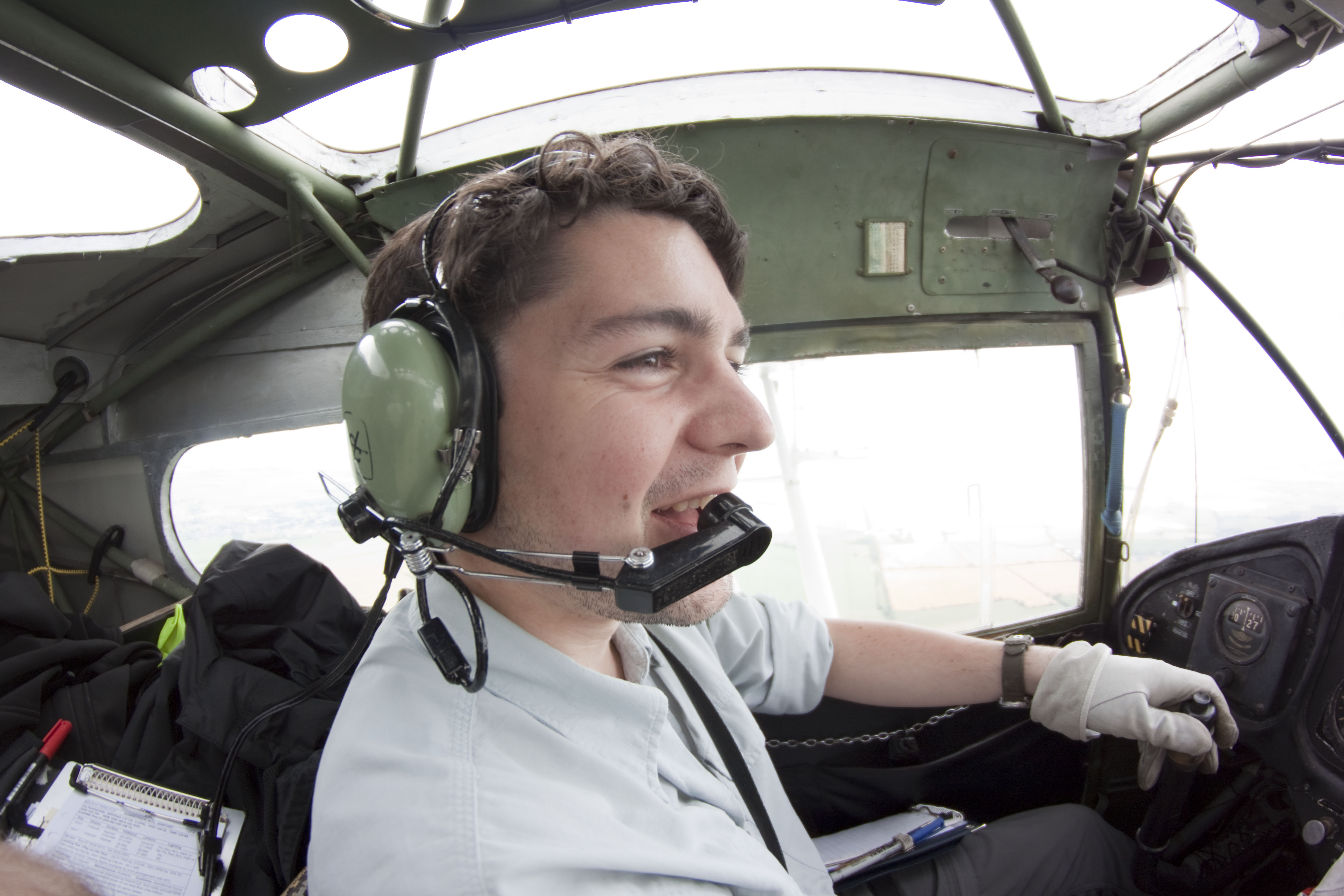
Safely over The Wash, we were now routing deep into the flat expanse of East Anglia and the lack of variety in the terrain stretched out this leg into what seemed an age. We chugged along for mile upon mile of fields and small villages with their identical church spires and began to really start feeling the distance and the inadequacy of JT’s long past their best seats. Eventually, Ipswich appeared on the horizon and the need to concentrate for the final route in and work the radios provided some relief.
We had expected the approach to Weald to be like the Battle of Britain, but we were more or less alone, apart form a single microlight headed toward Clacton and then what looked to be a Cessna 120 cavorting about a few hundred feet above us, not talking to anyone. Iain demonstrated his multi-tasking skills again by simultaneously talking on the radio and diving away from our oblivious companion into a position where we could keep an eye on him.
Safely out of the way, we simply had to follow the motorway out of Ipswich to Colchester and then on to the VRP at Chelmsford, before approaching into the final destination. It was hot, in the cockpit, by this time and we were getting a little ratty in the cramped space, but the thought of a nice, cold beer at the bar, kept us suitably focussed and at last, North Weald came into view.
What a feeling it was to arrive and park up next to three other lovely Austers and an original Husky; all of which put JT to shame, but it didn’t seem to matter as once again, we flopped out of the confines of the cockpit; hot, thirsty, but delighted and both of us grinning from ear to ear.


Peter Gill, the IAC secretary and pilot of a beautiful bright yellow J1N, immediately came over to greet us and we felt, all of a sudden, very much at home. The organisers at Weald, too, made us feel unbelievably welcome and there was not a hint of the snobbery we had perhaps unfairly expected. JT was completely covered in dead bugs by this time and was looking rather more shabby than usual, but the guys at Weald seemed genuinely excited by our arrival and we were told that we could go where we liked and best of all, that there was no requirement to wear a high vis vest; now this was our kind of airfield! No high vis vests, no overly done bureaucracy, no landing fees or camping fees; just a warm welcome and a gathering of like minded people with a love for flying and its rich heritage. It was wonderful.


After meeting the other early arrivals from the IAC, we made our way to the bar and ordered a well deserved pint. Sitting in the evening sun, finally, nine hours or so after leaving our home strip and 6 hours and 35 minutes flying time later, taking our first sip of that pint felt a bit like the final scene of ‘Ice Cold in Alex’.
The other early arrivals, a great bunch of the IAC contingent, had ordered a taxi to the local pub for food and they whisked us aboard. With our heads reeling a little still, from the journey, the heat and that first, quickly downed pint, we found ourselves at a lovely old country pub and sitting down to enjoy a great meal in the good company of fellow Auster pilots.
They had all been flying together for years and had some great stories to tell. We sat back and listened, taking it all in, still grinning. One of the pilots, Richard, told us about his many trips down to France with his friends Dan and Polly, who fly the big old 1964 Husky and have an enviable camping set up. They told us about one occasion where they were forced to land short of their destination due to bad weather, at a small strip Richard knew of and, arriving unannounced, were driven by the strip owner to a palatial Chateau to be wined and dined for the evening by complete strangers! Flying’s like that, it seems; no matter where you end up, there will always be a fellow flier to be found, who at once understands and is able to help you out of a tight spot.
Richard turned out to be a bit of an Auster collector and when asked how many he had, he replied, ‘Oh, I dunno,’ in that laid back west country accent of his, ‘bout’ sixteen I ‘spose’.’ Sitting enjoying the meal in this company was a lovely end to the day and later in the bar, we were told about the rich aviation history of North Weald and the many pilots who had flown there. Above the urinal in the men’s toilets, an old section of a B17, complete with nose art, is hung on the wall. It’s not until you take a close look at it, that you realise that it’s riddled with bullet holes.
Full of good food, wine and beer, we slept like babies that night, in our hastily erected tent and probably dreamt that we were still at the controls of JT, chugging along at 80 mph over an endless East Anglia.
The Saturday saw another 11 Austers turn up and what a great sight it was to see them all gathered in one place – all proudly parked in a line with our battered little JT looking surprisingly at home amongst them, basking in the sun between the Husky and a Beagle Terrier. During the course of the day, many enthusiasts came over to talk to us and ask about our trip and the Auster with the funny, snub nose. There were all sorts of other classic aircraft at the event aside from the four anniversary types; everything from Luscombes and Cubs to a Magistair and a rare Stinson, not to mention the resident Spitfire which gave us all a nice, low, fly-past in the afternoon.


It was a privilege to feel part of the event and the attraction; part of a proud heritage of historic British aircraft and all of it was something Iain and I had just not expected. We were even more bowled over when we won the ‘Spirit of the Fly – In’ award in the presentation ceremony on Saturday afternoon. Then we were given a prize for the longest flight, too! Apparently we had flown further than pilots from The Netherlands and France to get there. Our little trophy now proudly sits on top of our long since dead, but still installed, Air Driven AI and there, I hope, for posterity, it shall stay.
That evening in the bar we probably had one or two pints too many, still basking in our new found glory and entertained by more stories from Richard, Dan and Polly, which unfortunately are not suitable for print in this sort of magazine. Later, we were treated to more stories from a long retired Naval pilot who’d flown in, in his newly acquired Taylor Monoplane. He stood up to give a toast at about 10 pm, something he apparently does at every such gathering and promptly sat back down. He later told us that the toast had originated in the Falklands Conflict where he served with the famous Harrier Pilot, ‘Sharky’ Ward and also how he claimed to be the only pilot ever to go both over, and under, Mont Blanc. He had had an engine failure whilst crossing the Alps on his 65th birthday and managed to put his machine down in a valley on the Italian side. The Italians helped him trailer it up and as he’d come over it, he was damned well going to go under it, and drove the wrecked aeroplane on its trailer through the tunnel to be able to make that claim. He’d bought the Taylor Monoplane to fly whilst his other machine was still being rebuilt.
Although we’d been as sensible as we could be on the drinks front, as a consequence of staying up and listening to the various bar stories that is universal to flying clubs across the world, our planned departure time of 09:00 the following day inevitably slipped and we didn’t get airborne until 10:10. It has to be said that we were feeling a little bit on the weary side, but as one well known flying instructor and Pitts pilot in Scotland says, under such circumstances, you simply put your trust in God, open the throttle and go!
Climbing out from Weald was comical with a full fuel load and already warm temperatures and it took an age to reach anything like a sensible altitude; enforced ‘nap of the Earth’ Pete calls it and we can empathise with that!
I had drawn the short straw for the first leg home and once clear of Ipswich, we found ourselves bumping along over East Anglia once again, in an already very thermic sky. This time we planned to stop off at Sherburn in Elmett in Yorkshire, on recommendation by Pete and it seemed a long way from East Anglia in the heat of the morning. On the final run in from Selby, over two hours later, we hit one almighty thermal that sent Iain’s diminutive frame hurtling toward the roof where he cracked his head, whereas my own, well fed, 200lbs of ballast fared a little better. Iain didn’t draw blood, but I think he was sent little a dizzy for a time and seemed more wobbly than usual when we clambered out at Sherburn.


We received a friendly welcome there, landing at 12:55 on the well kept grass of Runway 24. We refuelled both the Auster and ourselves and even cleaned the accumulation of dead bugs off the windows and wings. We swapped seats again and were off at 14:50 and after another laboured climb, quickly found that the oil temperature was unusually high, with a corresponding drop in pressure. We put it down to the heat and the load on the hard working little Continental and cautiously routed close to small airfields as we made our way back toward the coast at Scarborough, just in case.
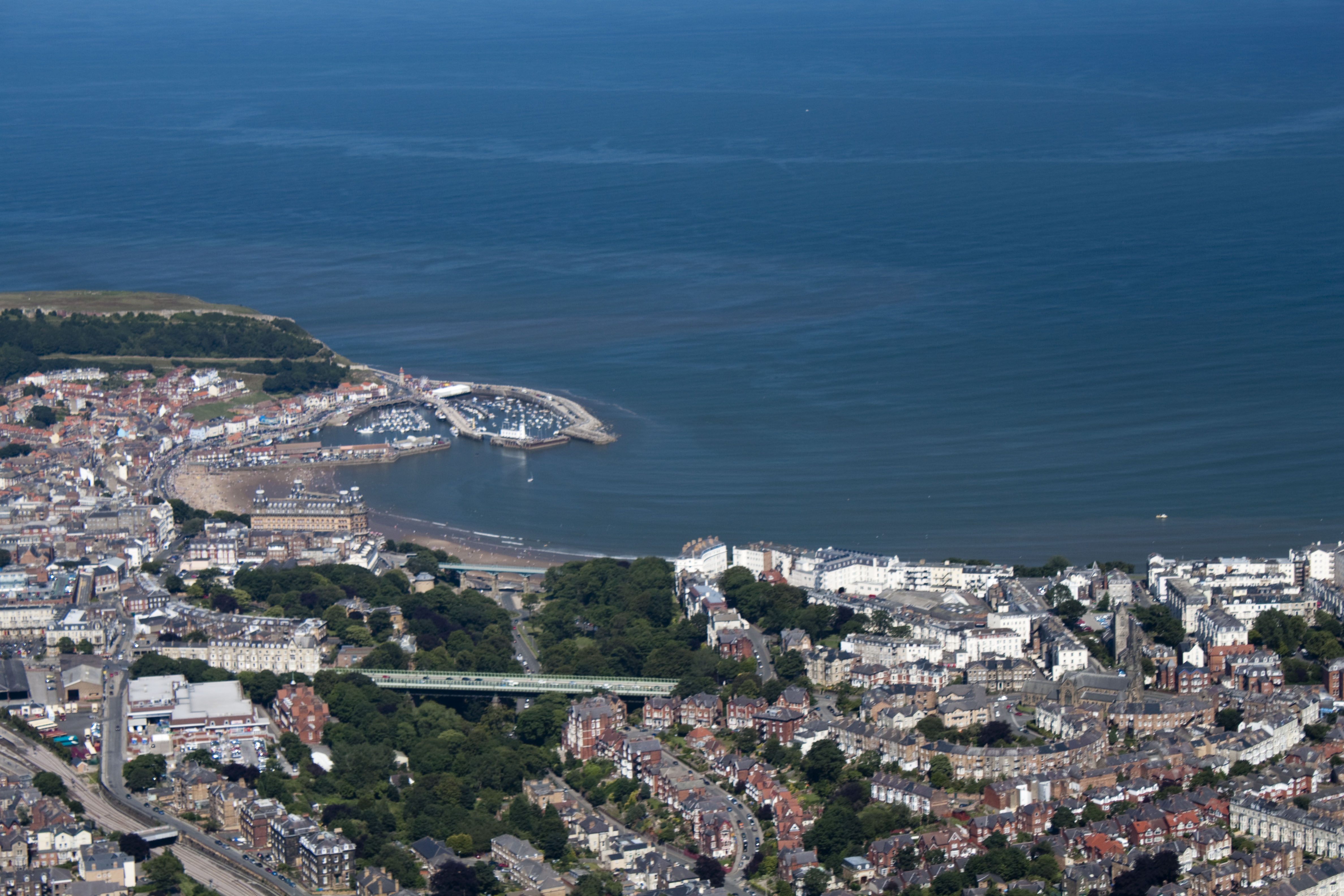
By the time we reached the coast and had spent some time in the cruise, the Ts and Ps had settled down and we could relax to enjoy the view. Scarborough’s Grande, old Victorian buildings along the seafront looked even more Grande from the air and the long beach with its brightly coloured huts was a cheerful sight. Before too long we were past the now familiar territory of the industrial Durham and Newcastle coastline and into Northumberland.
Iain diligently dropped down for a spot of low flying as the Holy Isle appeared again, which looked even more mystical in a thin layer of coastal fog that had formed, making the old Monastery appear ghostly on the thin horizon out to sea. We got some good photos of Bamburgh castle from the landward side, this time, and then were welcomed back home to Scotland by the lovely sight of Berwick on Tweed, also partly veiled in mist, with its impressive Viaduct illuminated in the sun.

At last, the Firth of Forth loomed on the horizon and we felt that we were nearing home, which just goes to show how relative things are when we still had around 150 nm and nearly two hours flying to go, which, in a machine like the Auster, is a reasonable distance in itself.
The air over the Forth was lovely and smooth and Bass rock stood out beautifully in the sunshine of the late afternoon, like a beacon showing the way. Once across the Firth, we routed straight overhead Leuchars Air Base, it being a Sunday and joined for a left base leg on to Dundee’s westerly runway over the Estuary.

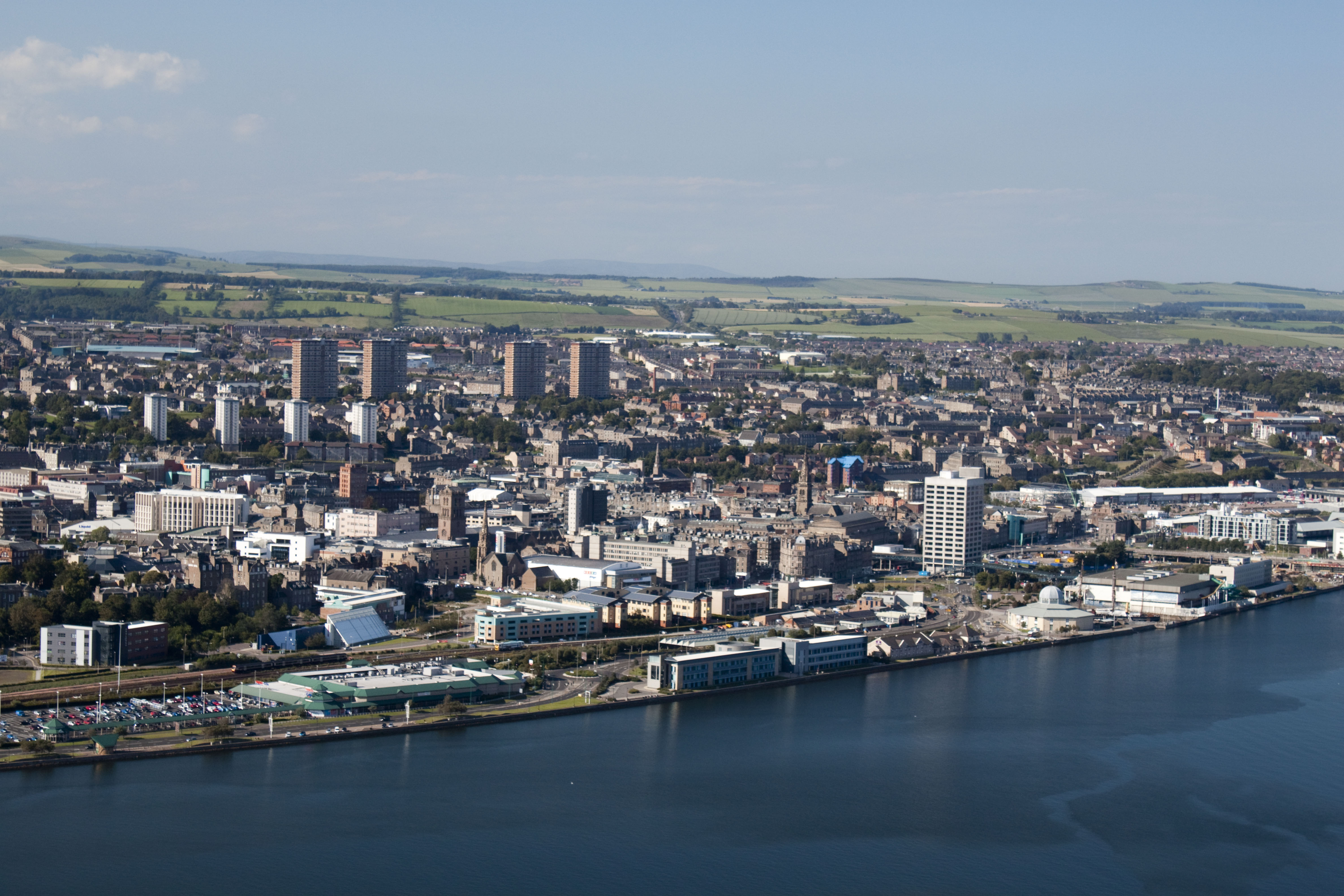
It’s a little surreal coming into Dundee from this direction, as you end up pointing straight at the city, which rises up from the banks of the Tay and sits at circuit height. It made for great views for me in the passenger seat as we came in. We landed on at 17:50, three hours after leaving Sherburn, which seemed such a long time before, by then. Taking off from North Weald that morning seemed a very long time ago indeed.
Everything was closing up at Dundee, so we didn’t hang about and after a quick refuel with Tayside aviation, we got going again after just a half hour stop to stretch our legs and empty our bladders.
The final flight back to the strip was wonderful; the evening air and more northerly latitude made for beautifully smooth flying conditions and the lowering sun cast a rich, syrup coloured glow across the fields and coastline, which enthralled us all the way back to Aberdeen.

We fell quiet flying along on the last leg, lost in our own thoughts and entranced by the beauty of the flight, watching the ragged cliffs, inlets and bays drifting by beneath the wings, without the pressure now, of getting anywhere; just simply drifting through the sky for the pleasure of it, it seemed. All our own familiar landmarks began to appear and it was a nice feeling to be back over our own stomping ground again, with the local hill, Bennachie, there to greet us as always.
We routed west around the Aberdeen zone and at 19:30, slipped gently down into the strip for a landing, with beams of sunlight out to the west, cascading down through gaps in the clouds. We’d made it; 1002 nm and 12 hours and 40 minutes flying over a weekend. JT had done us proud, carrying all that load with her brave little Continental engine and taking everything we threw at her, from grass strips to tarmac runways and long climbs in warm, muggy air: not bad at all for a 65 year old aeroplane.

Reflecting on the trip and the wonderful journey we’d made with this old machine, we realised that it wasn’t just the adventure of the flight that had made it such a great experience, or the many sights we saw; it was the people we had met and that sense of belonging to a community, however distant, that had made it for us. The organisers at Weald and the other pilots of the Auster club had truly put the icing on the cake for us and we both look forward to meeting up with everyone again in the future; but this time, it’s someone else’s turn to get a numb backside!

 The Auster Diaries
Pingback: Pictures added to N.Weald article | The Auster Diaries